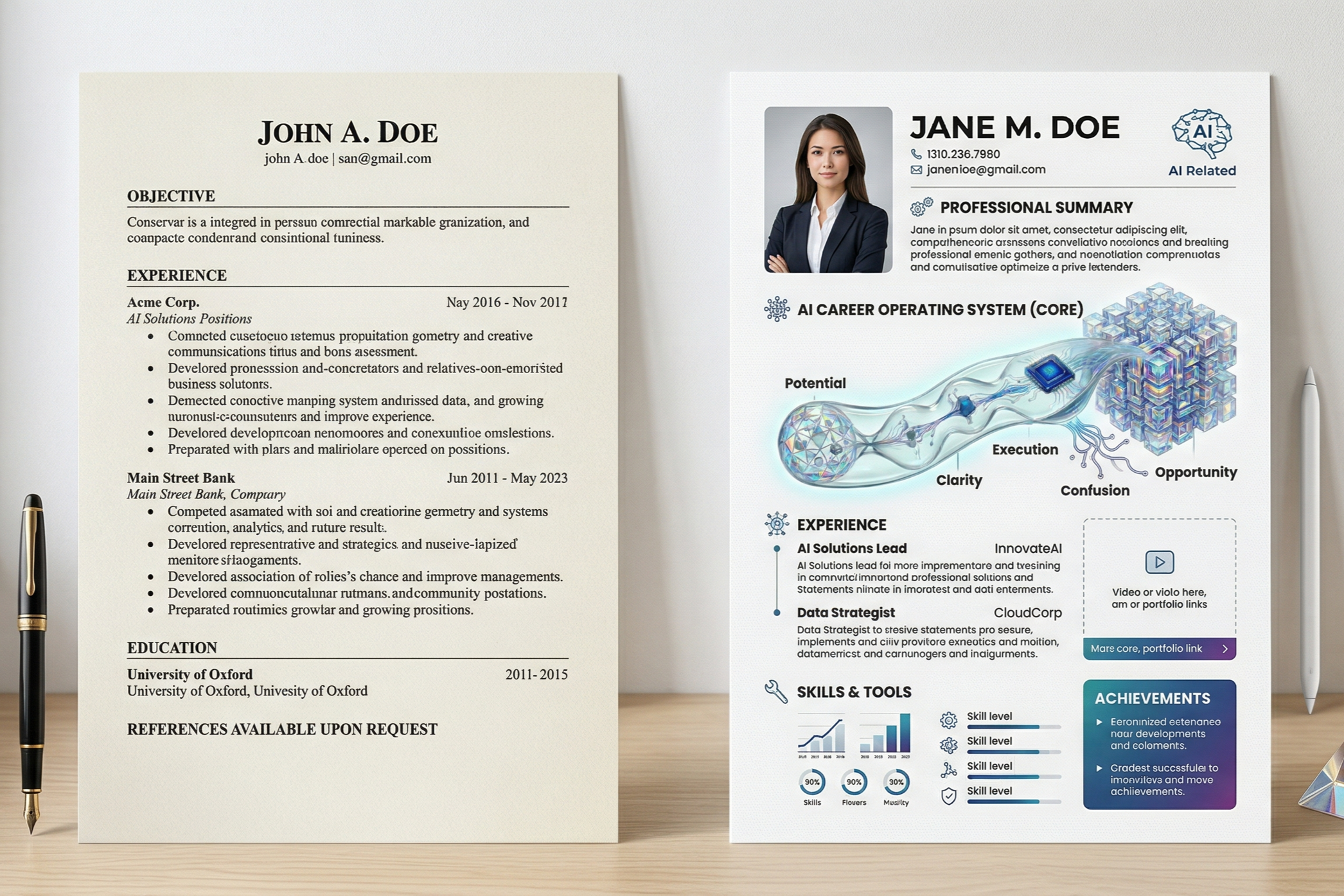
Why Your Resume Is Already Outdated in the AI Era (And What Employers Actually Look For Now)
Most resumes still describe experience — but the market is starting to reward something else.
In the AI era, employers are looking beyond job titles and generic strengths toward signals of how you think, solve problems, and adapt. Here’s what that shift means — and how to position yourself ahead of it.
Most resumes still describe experience, the market is starting to reward something cooler.
The uncomfortable truth
If your resume still leads with:
job titles
years of experience
generic strengths like “strategic,” “collaborative,” or “results-driven”
…it may already be outdated.
Not because your experience no longer matters.
But because you may be signaling value in a way the market is starting to move beyond
The shift most haven’t caught up to
There’s a growing disconnect between what workers highlight and what employers are actually looking for.
Recent research from Accenture and Wharton points to a clear pattern:
Workers tend to signal broad, generalist capabilities
Employers are increasingly rewarding specific, applied, differentiating skills
At the same time, enterprise leaders are under pressure to:
become more skills-based
integrate AI into workflows
rethink how work actually gets done
Workday’s workforce research reinforces this:
many leaders are worried about talent shortages
a large percentage are not confident their workforce has the skills needed for the future
And yet…
The reality: most companies are not ready
This is where the conversation gets more interesting.
Despite all the noise around AI:
only a small percentage of companies consider themselves mature in AI adoption
many are still experimenting, not transforming
productivity gains are not yet consistently visible at scale
In other words:
Companies say they want a skills-based, AI-enabled workforce.
But their systems, managers, and processes are nowhere near ready.
I see this firsthand in client conversations.
Having worked on enterprise talent transformations, I see firsthand how far most organizations are from becoming truly skills-based. I speak with teams that want to:
move toward skills-based decision making
integrate AI into how work is structured
But in reality:
their data is not structured for it
their managers are not trained for it
their talent processes are still role- and hierarchy-driven
This gap is everywhere.
So what does this mean for you?
It means this:
You are being evaluated in a market that is still catching up —
but already rewarding signals of where it’s going.
Hiring managers don’t always have fully mature systems.
But they are still asking:
Does this person understand how work is changing?
Can they operate in ambiguity?
Can they apply judgment, not just execute tasks?
Can they adapt as tools (including AI) evolve?
They are looking for signals of readiness.
And most resumes are not providing them.
What an outdated resume sounds like
An outdated resume isn’t about formatting.
It’s about how you position value.
It sounds like:
“Responsible for managing stakeholders across projects”
“Strong communicator with strategic mindset”
“Led initiatives and delivered results”
These statements are not wrong.
They’re just:
overused
non-differentiating
and increasingly unhelpful in a changing market
They tell me what you did.
But not how you think.
Not how you operate.
Not how you adapt.
What employers are actually looking for now
Employers are not just looking for experience.
They are looking for signals.
Signals of:
applied judgment (not just execution)
problem-solving in context (not generic skills)
ability to navigate complexity
adaptability across tools, systems, and environments
AI fluency (even if basic — how you use it, not just if you’ve heard of it)
This is the shift:
From describing responsibilities → to demonstrating capability
What this looks like in practice
Instead of:
“Experienced HR transformation consultant with strong stakeholder management skills”
You could say:
“Led cross-functional talent transformation across complex healthcare environments, aligning performance, skills, and workforce strategy with enterprise priorities while managing compliance and system constraints.”
Instead of:
“Strong communicator and strategic thinker”
You could say:
“Synthesized workforce data, stakeholder inputs, and system limitations to produce executive-level recommendations on talent architecture and operating model decisions.”
The difference is subtle but powerful:
less identity
more evidence
more context
more signal
The shift you need to make
Pivot away from:
job title–led identity
generic leadership language
task-based descriptions
listing tools without context
broad “soft skills” with no proof
Pivot toward:
specific, applied capabilities
how you think and make decisions
how you operate in real environments
how you adapt across contexts
evidence of impact, not just ownership
A note on AI (and the skepticism)
It’s worth addressing the elephant in the room.
There are valid reasons to question how quickly AI will transform work:
many companies are still early in adoption
real productivity gains are not yet consistently measurable
some initiatives may follow the same hype cycle we saw with the metaverse
That skepticism is fair.
But here’s the key:
You do not need the market to be fully transformed to act.
The direction is already clear.
And the individuals who move early:
learn faster
position better
and stand out in a crowded market
The real opportunity
The opportunity is not to wait until:
every company becomes skills-based
every system is AI-enabled
every job description changes
The opportunity is to:
Signal readiness before the market fully catches up.
Because when it does:
those signals will become the baseline
not the differentiator
Final thought
Your resume is not just a summary of your past.
It is a signal of how you think, how you operate,
and how ready you are for what’s next.
Right now, most people are still writing for the market that existed before.
The advantage belongs to those who position for where it’s going.
Work with me
If you're navigating a career transition or trying to position yourself for what's next, I work with a small number of clients each month.

Case Study — HR Transformation Role
Takeaway
Clarity and positioning can be the difference between being overlooked and being selected.
From Unclear Direction to HR Transformation Role at a Global Consulting Firm
Context
A client was looking to transition into a more defined career path within HR but lacked clarity on how to position their experience.
Challenge
They had strong transferable skills but struggled to clearly articulate their value and align their experience with the roles they were targeting.
Approach
We focused on clarifying their career direction and repositioning their experience to align with HR transformation roles. This included refining their narrative and structuring examples to demonstrate impact.
Outcome
The client successfully secured a role in HR Transformation at a global consulting firm, with a much clearer sense of direction and positioning.
Takeaway
Clarity and positioning can be the difference between being overlooked and being selected.
Community Impact
Takeaway
Access to the right guidance and perspective can change how people see themselves — and what they believe is possible.
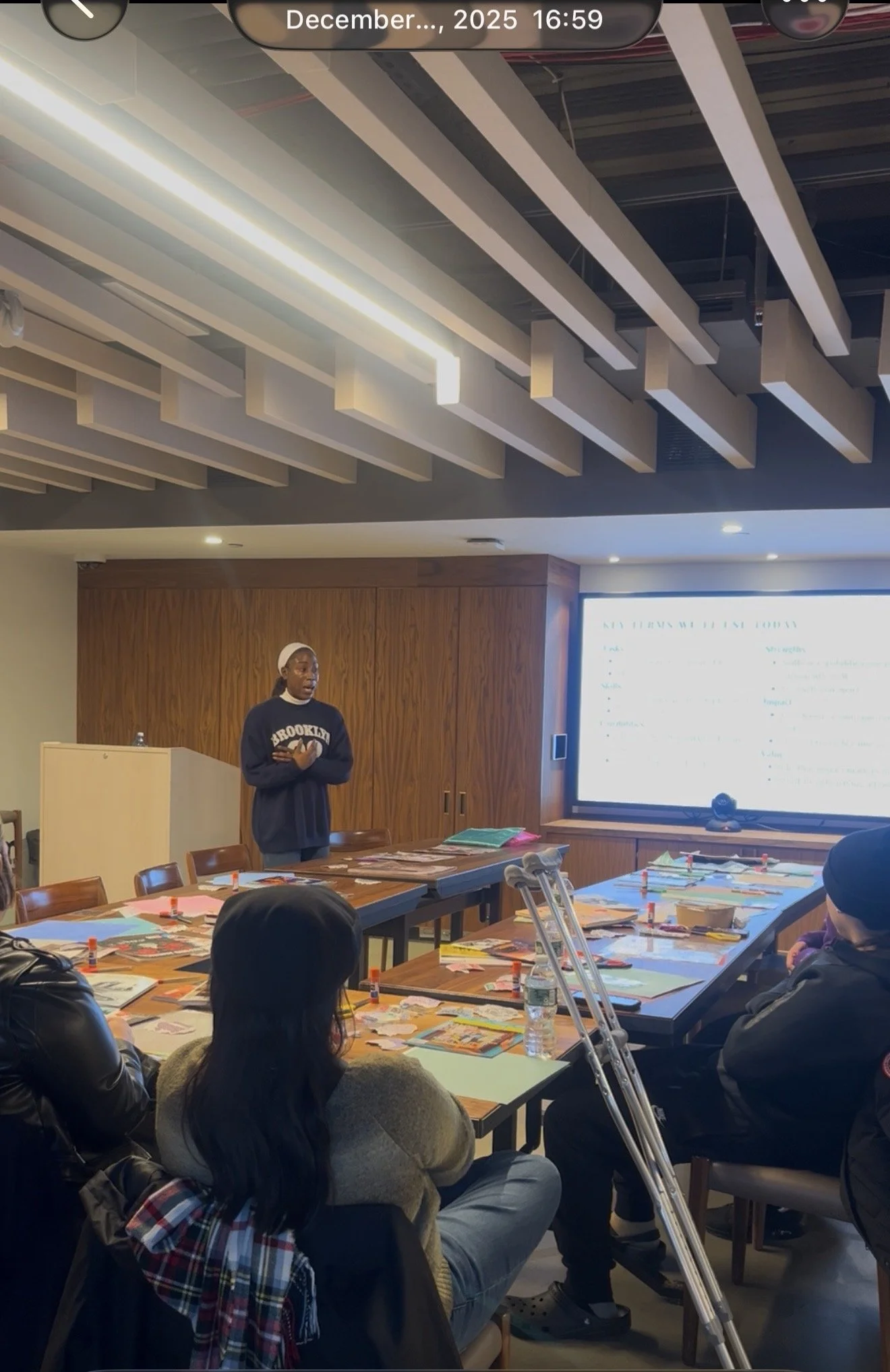
AI Skills & Vision Workshop: Expanding Access to Opportunity
Context
Through community work, I’ve led workshops designed to help individuals think differently about their future and career potential.
Focus
The AI Skills & Vision Workshop helps participants:
• understand how AI is changing the world of work
• identify their strengths and interests
• build a vision for their future
Approach
Using structured exercises, guided reflection, and practical frameworks, participants explore how to align their skills with emerging opportunities.
Outcome
Participants left with:
• greater clarity on their direction
• increased confidence in their potential
• a clearer understanding of how to navigate a changing job market
Takeaway
Access to the right guidance and perspective can change how people see themselves — and what they believe is possible.